
Your Garage Door Is Powerful — Make Sure It's Safe
Most homeowners don't think twice about their garage door once it's installed. You press the button, it goes up. You press it again, it comes down. Simple enough. But here's something worth considering: your garage door is the heaviest moving object in your home. A standard residential garage door can weigh anywhere from 130 to over 400 pounds, and it moves with serious force.
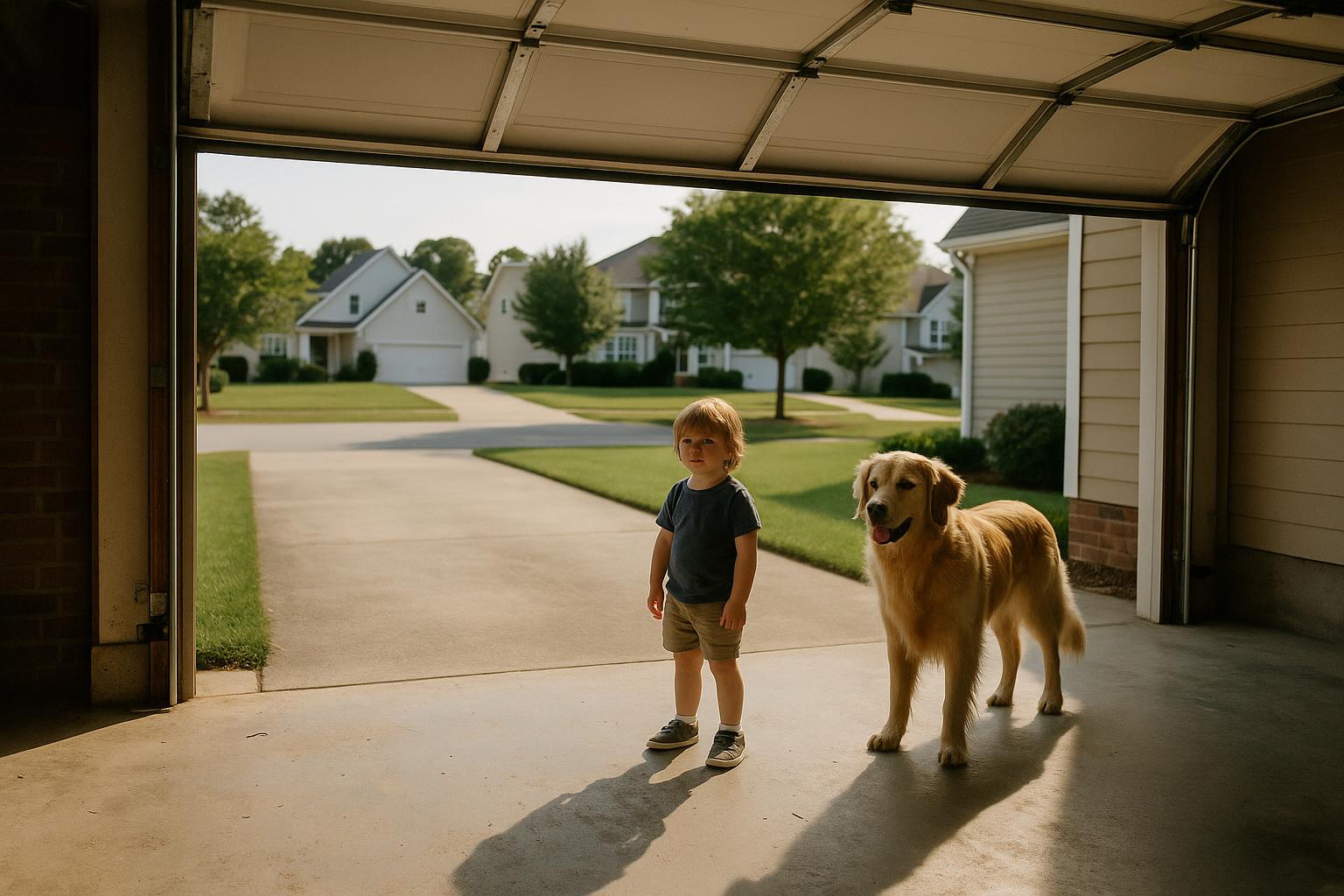
For adults who understand how it works, that's rarely a problem. But if you have young children or pets running around your Creedmoor home, a garage door that isn't properly maintained or equipped with the right safety features can pose a real risk. The good news is that keeping your family safe doesn't require a major overhaul — just some awareness, a few checks, and occasionally a professional tune-up.
Understanding the Risks
Garage door injuries are more common than most people realize. According to the U.S. Consumer Product Safety Commission, tens of thousands of people are treated for garage door-related injuries every year. Many of those involve children.
The most serious risks include:
- Entrapment: A closing garage door that doesn't detect an obstruction can pin a child or pet underneath it.
- Pinch points: The hinges and panel joints of a garage door can catch small fingers as the door moves.
- Falling doors: If springs break or cables snap, a door can drop suddenly with tremendous force.
- Remote access: Kids who play with garage door remotes or wall buttons can accidentally activate the door while someone is in its path.
None of this is meant to scare you — it's meant to help you take the right precautions. And most of these risks are completely preventable.
Test Your Auto-Reverse Feature Monthly
Since 1993, all garage door openers sold in the United States have been required to include an auto-reverse mechanism. This feature uses either a mechanical sensor or photoelectric eyes (or both) to detect when something is in the door's path. When it senses an obstruction, the door should immediately stop and reverse direction.
Here's how to test it:
- Place a roll of paper towels or a piece of 2x4 lumber flat on the ground in the center of the doorway.
- Press the button to close the garage door.
- When the door contacts the object, it should reverse within two seconds.
If it doesn't reverse — or if it hesitates significantly — your opener needs attention. This is one of the most important safety features on your garage door, and it should never be ignored. If you're in Creedmoor or the surrounding area and your auto-reverse isn't working properly, call a professional to adjust or replace the opener before using the door regularly.
Check Your Photoelectric Sensors
Those small sensors mounted near the bottom of your garage door tracks on either side are called photoelectric eyes. They project an invisible beam across the doorway. If anything breaks that beam while the door is closing, the door stops and reverses.
Over time, these sensors can get knocked out of alignment, covered in dust or cobwebs, or damaged by moisture. Here's what to look for:
- Both sensor lights should be lit and steady (usually green or amber, depending on the brand).
- If one light is blinking, the sensors are likely misaligned.
- Clean the lenses gently with a soft cloth if they look dirty.
- Make sure nothing is blocking the beam — garden tools, boxes, or debris can interfere.
If you've cleaned and adjusted them and they still aren't working correctly, it's time for a professional inspection. Faulty sensors are not something to put off, especially with kids or pets in the house.
Talk to Your Kids About Garage Door Safety
Technology can only do so much. One of the most effective safety measures is simply teaching your children to respect the garage door. Here are a few rules worth establishing:
- Never stand or play under a moving garage door. It's not a game to race under it as it closes.
- Don't touch the tracks, springs, or cables. These parts are under extreme tension and can cause serious injury.
- The wall button and remote are not toys. Only adults should operate the garage door, or at minimum, children should only use it under supervision.
- Keep fingers away from the door panels. When the door is moving, the spaces between panels become pinch points that can trap small fingers.
For families in Creedmoor with young kids, having this conversation early — and reinforcing it regularly — can prevent accidents before they happen.
Keep the Emergency Release Cord Out of Reach
Every garage door opener has a red emergency release handle that hangs from a cord. Pulling it disconnects the door from the opener so you can operate it manually — useful during power outages or emergencies. But for small children, that dangling cord can be tempting to grab.
Consider tying the cord up higher so it's out of reach of young children but still accessible to adults. You don't want to remove it entirely, because you may need it in an emergency, but keeping it at a safe height is a smart precaution.
Schedule Regular Maintenance
Many of the safety risks associated with garage doors come from wear and tear that builds up over time. Springs weaken. Cables fray. Rollers wear out. Sensors drift out of alignment. An opener that worked perfectly three years ago might not reverse as reliably today.
Having your garage door professionally inspected and maintained at least once a year is one of the best things you can do for your family's safety. A trained technician can spot problems that aren't obvious to the average homeowner — things like a spring that's close to breaking, a cable that's starting to unravel, or an opener that's losing its sensitivity.
At Creedmoor Garage Door, we include safety checks as part of every maintenance visit. We test the auto-reverse, inspect the sensors, examine the springs and cables, lubricate moving parts, and make sure everything is operating the way it should. It's a small investment that gives you real peace of mind.
Upgrade an Older Opener If Needed
If your garage door opener was manufactured before 1993, it likely doesn't have the auto-reverse and photoelectric sensor features that are standard today. While these older openers may still function mechanically, they lack the safety technology that modern families depend on.
Replacing an outdated opener is one of the most impactful upgrades you can make. Newer models come with rolling-code technology for better security, battery backup systems for power outages, and smartphone connectivity so you can monitor your garage door from anywhere. Most importantly, they include the safety features that protect your kids and pets every single day.
Don't Wait for an Accident to Take Action
Garage door safety isn't complicated, but it does require attention. A few minutes of testing each month, a conversation with your kids, and an annual professional inspection can make all the difference. If something doesn't feel right — the door hesitates, the sensors flicker, the springs groan — don't ignore it.
If you're a homeowner in Creedmoor, Butner, Wake Forest, or any of the surrounding communities and you'd like a professional safety inspection, Creedmoor Garage Door is here to help. We'll make sure your garage door is working safely and reliably so you can stop worrying and start enjoying your home.