
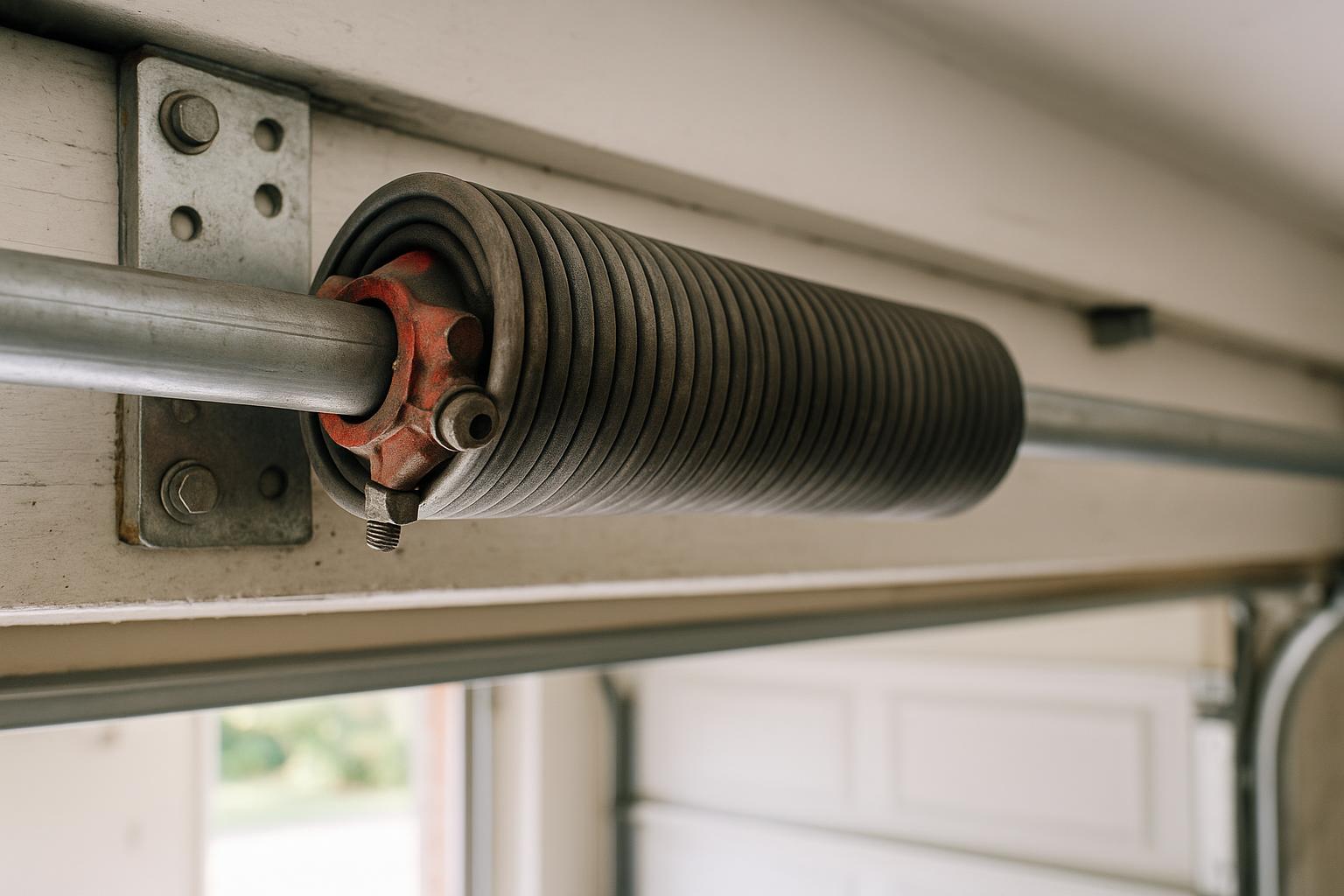
Your Garage Door Springs Are Working Harder Than You Think
Every time you open and close your garage door, a pair of tightly wound springs does most of the heavy lifting — literally. These springs counterbalance the weight of the door, which can be anywhere from 130 to 250 pounds depending on the size and material. Without them, your garage door opener alone couldn't move the door at all.
Most homeowners in Creedmoor don't think about their garage door springs until something goes wrong. But springs wear out gradually, and there are usually clear warning signs before they fail completely. Recognizing those signs early can save you from an inconvenient — and potentially dangerous — situation.
How Long Do Garage Door Springs Last?
The average torsion spring is rated for about 10,000 cycles. One cycle equals one full open and one full close. If your household opens and closes the garage door four times a day, that works out to roughly seven years of use. Families that use the garage as their primary entrance may burn through those cycles even faster.
Extension springs, which are found on some older or lighter doors, tend to have a similar or slightly shorter lifespan. Either way, if your garage door system is approaching the seven-to-ten-year mark, it's worth paying closer attention to how it's performing.
7 Warning Signs Your Garage Door Springs Are Failing
1. The Door Feels Heavier Than Usual
Try this simple test: disconnect your garage door opener by pulling the emergency release cord, then manually lift the door about halfway. A properly balanced door should stay in place on its own. If it feels unusually heavy or slides back down, your springs are likely losing tension and can no longer support the door's weight.
2. The Door Opens Unevenly or Crooked
If one side of the door rises faster than the other, it could mean one spring is weaker or has already broken. This puts extra strain on the remaining spring, the tracks, and the opener. An uneven door is a clear sign you need professional attention sooner rather than later.
3. You Hear a Loud Bang From the Garage
A broken torsion spring releases its stored energy all at once, producing a loud bang that many homeowners mistake for something falling or even a break-in attempt. If you heard a sudden, startling noise from your garage and now the door won't open, a snapped spring is the most likely culprit.
4. There's a Visible Gap in the Spring
Torsion springs are mounted on a metal shaft above the door. When a spring breaks, you'll often see a visible gap of an inch or two in the coil. Take a moment to look up at the spring assembly — if you see a separation in the coils, the spring has snapped and needs to be replaced.
5. The Opener Struggles or Stops Midway
Your garage door opener is designed to work with the springs, not to replace them. When springs weaken, the opener has to work much harder to lift the door. You might notice it straining, moving slower than usual, or stopping partway through the cycle. Continuing to run the opener under these conditions can burn out the motor.
6. The Door Slams Shut Quickly
Healthy springs control the speed at which your door closes. If the door drops faster than normal or slams shut, the springs aren't providing enough resistance. This is a safety concern, especially for households with children or pets who might be near the door.
7. You Notice Rust or Wear on the Coils
Rust weakens the metal and accelerates spring failure. In areas like Creedmoor where we get our share of humidity throughout the year, garage door springs can develop surface rust over time. If your springs look corroded or worn, it's a good idea to have them inspected by a professional.
Why You Shouldn't Replace Garage Door Springs Yourself
We understand the DIY spirit — many of our customers in Creedmoor and the surrounding communities like Butner, Stem, and Wake Forest are handy homeowners who tackle plenty of projects on their own. But garage door springs are one job we strongly recommend leaving to a trained technician.
Here's why: torsion springs are under extreme tension. A spring that's improperly handled during removal or installation can cause serious injury. Professional technicians have the specialized tools, training, and experience to replace springs safely and ensure the door is properly balanced afterward.
Beyond safety, there's also the matter of getting the right spring for your specific door. Springs vary in wire gauge, length, and inside diameter. Installing the wrong spring can lead to premature failure or damage to other components of the door system.
What to Expect During a Spring Replacement
When you call a garage door company for spring replacement, the process is usually straightforward. A technician will inspect the entire door system, identify the correct replacement springs, and install them — typically in under an hour. A good technician will also check the cables, rollers, hinges, and opener to make sure everything else is in working order.
At Creedmoor Garage Door, we carry common spring sizes on our trucks so most repairs can be completed in a single visit. We also take the time to explain what we found and what we did, because we believe you should understand what's going on with your own home.
Extending the Life of Your Springs
While springs will eventually wear out no matter what, a little maintenance can help them last longer:
- Lubricate the springs every six months with a silicone-based garage door lubricant. This reduces friction and helps prevent rust.
- Schedule annual maintenance to catch small issues before they become big problems. A technician can check spring tension, balance, and overall door health.
- Avoid unnecessary cycles. If you're opening and closing the door more than you need to, those extra cycles add up over the years.
- Address problems early. If you notice any of the warning signs listed above, don't wait. A small repair now can prevent a bigger headache later.
Don't Wait for a Spring to Snap
A broken garage door spring always seems to happen at the worst possible time — when you're running late for work, loading up for a weekend trip, or trying to get the car in before a storm rolls through. The good news is that most spring failures give you warning signs well in advance.
If your garage door is showing any of the symptoms we've described, or if your springs are simply getting up there in age, give us a call. Creedmoor Garage Door serves homeowners throughout Creedmoor, Franklinton, Oxford, and the surrounding area with honest, reliable service. We'll take a look, give you a straight answer, and get your door working safely again.