
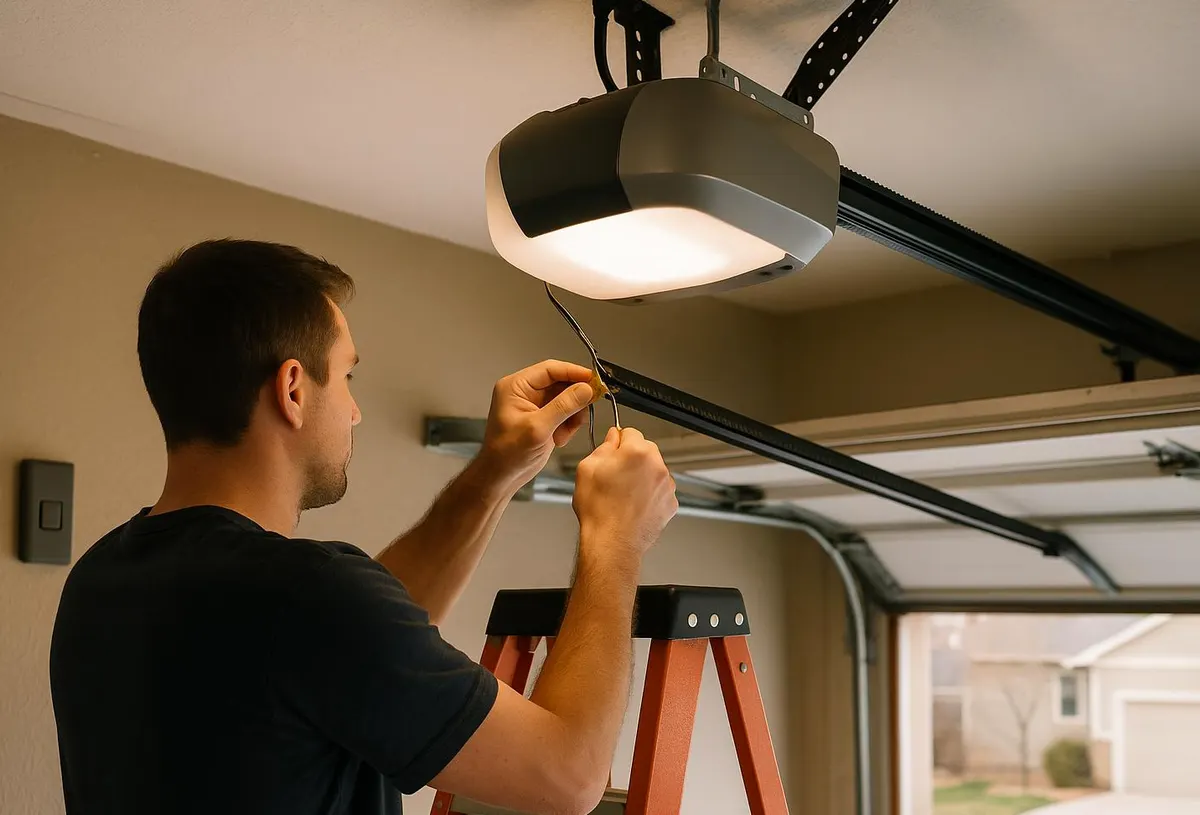
Disconnect the opener, lift the door by hand to about waist height, and let go. If it stays put — or drifts down slowly — it's balanced. If it drops fast or shoots upward, it's not, and your opener has been compensating for that imbalance every single time it runs.
Most homeowners never think about balance until something breaks. But an unbalanced door is one of the most common reasons garage door openers burn out years before they should. The good news: testing balance takes about ten minutes, costs nothing, and tells you a lot about what's really going on with your system.
What "Balance" Actually Means
A properly balanced garage door is counterweighted by its springs so that the door itself weighs almost nothing to lift by hand, despite actually weighing 130-400 pounds depending on the material and size. The springs — torsion or extension — do the heavy lifting. The opener's motor is only meant to provide a small push to get the door moving and guide it along the track, not to haul the full weight up and down.
When springs lose tension — from age, humidity cycling, or just the thousands of open-close cycles a door goes through — that balance shifts. The opener starts doing work it was never designed to do.
Tools You'll Need
- A sturdy step ladder
- Work gloves
- A helper (not required, but makes the test easier)
- A notepad or your phone, to jot down what you observe
How to Test Your Door's Balance
- Close the door completely. Start from a fully closed position so you have a consistent baseline.
- Locate the opener's release cord. This is the red-handled rope hanging from the trolley on the ceiling track. Pull it straight down and toward the door to disconnect the opener from the door.
- Lift the door manually. With the opener disconnected, raise the door by hand. Pay attention to how it feels — smooth and light, or jerky and heavy in spots.
- Stop at waist height and let go. A balanced door will hold its position or drift down slowly over several seconds. An unbalanced door will either fall quickly or spring upward on its own.
- Repeat at about three-quarters open. Balance can be fine at one height and off at another, especially with torsion springs that are starting to wear unevenly or with doors that have sagged slightly on one side.
- Note which direction it moves and how fast. A door that drops means springs have lost tension. A door that shoots up means springs are over-tensioned — less common, but it happens, especially after a DIY adjustment.
- Reconnect the opener. Pull the release cord again (or follow your opener's reconnect procedure) and run the door through a full cycle using the wall button to confirm it reconnects properly before you rely on it again.
What an Unbalanced Door Is Doing to Your Opener
If the test showed a door that drops or climbs on its own, here's what's actually happening every time someone hits the button in the kitchen:
- The motor works harder than it should on every single cycle, which shortens the life of the gears and drive mechanism.
- The opener may struggle to fully close the door, reversing partway or stopping short — something a lot of homeowners mistake for a sensor problem.
- Chains and belts wear faster because they're carrying load they weren't built to carry.
- Circuit boards and capacitors take repeated strain, which is a common reason openers fail outright instead of just wearing down gradually.
- The door itself can rack or twist in the tracks over time, especially on older wood or steel doors already dealing with humidity swings common in this part of North Carolina.
In other words: that strange grinding noise or that opener that quit working last summer during a heat wave may have started months earlier as a simple balance problem nobody caught.
What You Can Check Yourself vs. What Needs a Technician
The balance test itself is safe and squarely a homeowner job — it requires no tools beyond your own hands and a ladder. What's not a DIY job is fixing an imbalance you find.
Torsion springs are wound under extreme tension and store enough energy to cause serious injury if handled without the right bars and technique. Extension springs carry similar risk if they're not properly contained with safety cables. Adjusting spring tension, replacing a worn spring, or re-aligning a door that's racked in its tracks all call for a trained technician with the right equipment.
When to Call Creedmoor Garage Door
If your door fails the balance test, don't keep running it on the opener hoping it'll even out — it won't, and the opener will keep absorbing the extra load until something gives. Call us and we'll come out, confirm what the springs and hardware are actually doing, and handle it properly. That might mean Spring Replacement if tension has dropped off, or a full Garage Door Maintenance visit if we find wear in the rollers, hinges, or track alignment contributing to the problem. If the opener itself has already taken damage from months of overwork, we'll let you know honestly whether a repair or a replacement makes more sense for your situation.
If you're anywhere in Creedmoor, Butner, Oxford, Stem, Franklinton, Wake Forest, Youngsville, or Louisburg and your door didn't pass the balance test, give Creedmoor Garage Door a call. We'll get it sorted before it costs you an opener.