
Winterizing Your Garage Door Before Granville County's First Hard Freeze
Getting your garage door ready for winter means doing a few specific things before the cold settles in: lubricate the moving parts with a cold-weather-rated product, replace or reseal worn weatherstripping, test the door's balance, and make sure your opener has a way to work if the power goes out during an ice storm. None of this takes more than an afternoon, and it's a lot cheaper than an emergency spring replacement in January.
Why Winter Hits Garage Doors Differently Here
This part of North Carolina doesn't get brutal winters, but it gets the kind of swings that are hard on hardware — a 65-degree day followed by an overnight freeze, the occasional ice storm that knocks out power for hours, and a lot of moisture sitting around garages that back up to pine trees. Metal springs and torsion hardware tighten up and lose some flexibility in the cold, which is exactly when an old spring that's been quietly weakening all summer decides to let go. Wood trim and steel panels that have been soaking up humidity for months are also more prone to swelling, rust, or cracking once temperatures start dropping fast.
The Pre-Winter Checklist
Work through these before the first real cold snap, not after:
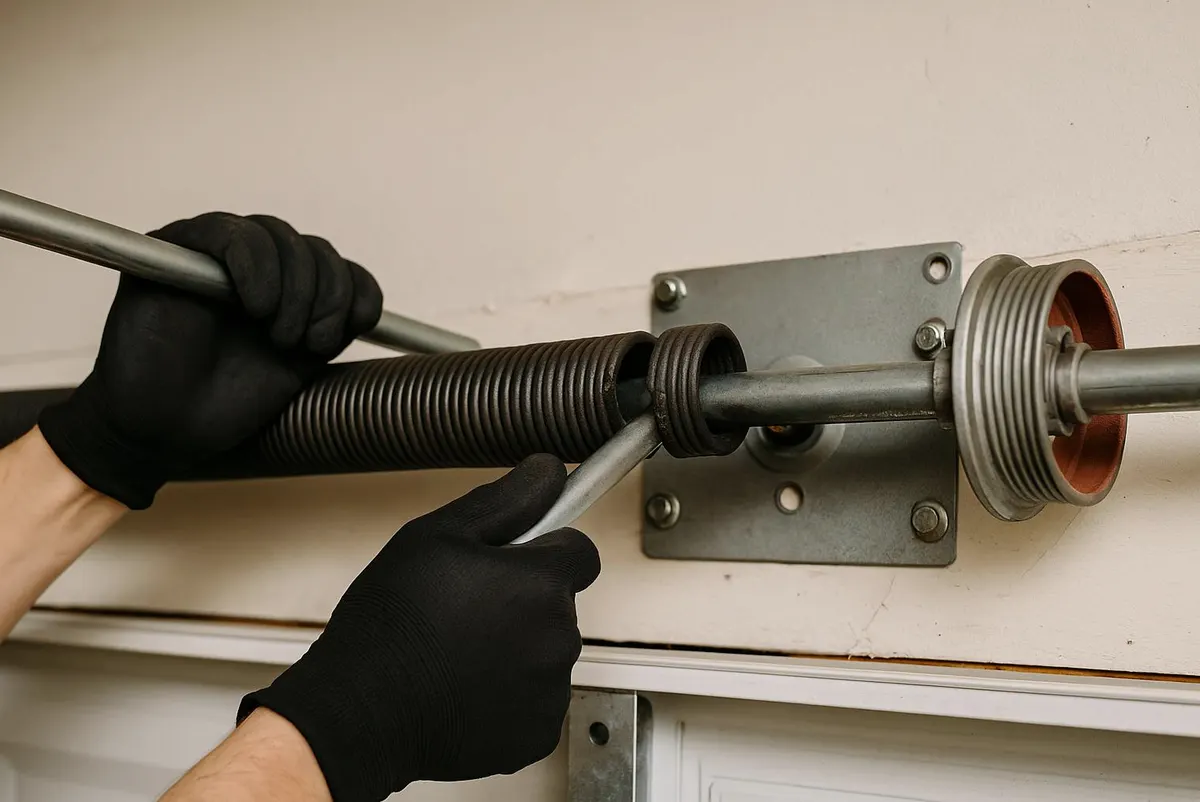
- Lubricate hinges, rollers, and the torsion spring with a silicone-based or lithium-based garage door lubricant — not WD-40, which is a cleaner, not a lubricant, and burns off fast. Cold metal binds more than warm metal, and a dry roller that's been fine all summer can start squealing or sticking once the temperature drops.
- Inspect and replace weatherstripping. The rubber seal along the bottom of the door and the vinyl strips along the sides take a beating from summer heat, UV, and humidity. By fall, a lot of it is cracked, flattened, or pulling away from the track. Gaps here let in cold air, moisture, and pine needles, and they're a direct path for ice storm wind-driven rain to get under the door.
- Check the bottom seal and threshold for debris. Pine straw and leaves tend to pile up along the bottom track this time of year. If that debris holds moisture against the door's bottom edge, it can freeze solid overnight and keep the door from sealing — or from opening at all the next morning.
- Test the door's balance. Disconnect the opener (pull the emergency release cord) and lift the door halfway by hand. It should stay in place on its own. If it drifts up or crashes down, the springs are compensating poorly for the door's weight, and cold weather will make that worse, not better.
- Tighten hardware. Track brackets, hinges, and roller bolts loosen gradually from everyday vibration. A quick pass with a socket wrench on all visible bolts now prevents rattling, misalignment, and track separation once metal starts contracting in the cold.
- Look over the cables. Fraying or rust on the lift cables is a bigger deal in winter, when cold makes metal more brittle. If you see visible fraying, that's not a DIY fix — a snapped cable under tension can cause real injury.
Preparing for Ice Storms Specifically
Ice storms are the real wildcard for this area's winters, and they cause two kinds of garage door trouble: physical ice buildup and power outages.
For ice buildup, keep an eye on the bottom seal and track after any freezing rain. If the door has frozen to the ground, don't force it with the opener — that can strip the gears or bend the track. Warm the seal gently (a hair dryer works) or just wait for a thaw rather than muscling it open.
For power outages, this is where a battery backup for your opener earns its keep. Most garage door openers installed in the last several years can take a battery backup unit, which keeps the door operational for a number of cycles even with the power out — useful if you need to get a car out during a multi-hour outage, which isn't rare here when ice brings down lines. If your opener doesn't have one, it's worth adding before winter rather than during the next storm.
Don't Forget the Opener's Sensors
Cold, damp mornings are prime time for condensation to form on the photo-eye safety sensors near the bottom of the tracks. A foggy or misaligned sensor will make the door refuse to close, or reverse right back up. Wipe them down and check that both sensors are pointing directly at each other — a bumped sensor from a stored bike or ladder is a common, easily fixed culprit.
When to Call Creedmoor Garage Door
If your door is off-balance, you hear new grinding or popping sounds after lubricating, or the opener struggles more than it should on cold mornings, that's worth a professional look before winter, not after something breaks. Creedmoor Garage Door handles full garage door maintenance visits — balance checks, hardware tightening, lubrication, and weatherstripping replacement — as well as spring replacement if your springs are already showing their age. If a cable looks frayed or a spring looks stretched or gapped, don't wait; a controlled replacement now is far cheaper and safer than an emergency call during an ice storm.
We serve homeowners throughout Creedmoor, Butner, Oxford, Stem, Franklinton, Wake Forest, Youngsville, and Louisburg, and we're happy to walk through your door's winter-readiness with you. Call Creedmoor Garage Door today to schedule a pre-winter maintenance visit and head into the cold months with a door you can count on.